Anunnaki·Archives

Sommige vragen kun je alleen stellen als je er staat.

Een reizend archief van oude plekken, de hemel erboven, en de dingen waar we nog steeds geen verklaring voor hebben.

Plekken
18 locaties · allemaal uitgewerkt →
Draden
3 gevolgd →
Recent onderzoek
12 vastgelegd →
Bibliotheek
10 teksten →

Wat dit is

Anunnaki Archives volgt wat er in de archeologie op dit moment wordt opgegraven, gescand en bediscussieerd, en houdt van elke betrokken plek een blijvend dossier bij.

Egypte heropende in mei 2026 de opgraving bij Hawara. Een dateringspaper over Gunung Padang werd in 2024 ingetrokken. Muonscans blijven ruimtes vinden in de Grote Piramide. Dit gebeurt voortdurend, het wordt één keer gemeld, en daarna verspreidt het zich over honderd sites en video's die er nooit op terugkomen.

Dit is de plek waar dat wordt verzameld, tegen de eigen bronnen gecontroleerd en bijgehouden. Geen oordeel over het antwoord voordat we naar het bewijs hebben gekeken, en niet doen alsof een vraag gesloten is als dat niet zo is.

Hoe dit archief werkt

Vier soorten pagina, elk met een eigen functie.

Plekken

Eén locatie per keer. Wat er fysiek staat, wat de hemel erboven doet, en welke vragen nog openstaan. Bovenaan elke pagina staat of ik er zelf ben geweest of werk vanuit gepubliceerde rapporten.

Draden

Verhalen die in meer dan één cultuur opduiken. Bij elk staat welk soort verband aannemelijk is: gedeelde afstamming, contact, onafhankelijke uitvinding, of onopgelost.

Onderzoek

Recent onderzoek, gecontroleerd tegen de eigen bronnen. Elk item draagt een duidelijk label: peer reviewed, betwist, of een niet-beoordeelde preprint.

Bibliotheek

De bronteksten zelf, gratis en volledig te lezen, met bij elke vertaling het jaartal erbij zodat je weet hoe actueel die is.

Elke pagina draagt zijn bronnen en een controledatum. Waar iets speculatie is in plaats van bewijs, staat het in een gemarkeerd kader en zegt het dat ook. Vind je een fout, laat het weten, dan wordt die gecorrigeerd met een notitie over wat er is veranderd.

Recent onderzoek

Wat er recent daadwerkelijk is gepubliceerd of opgegraven, en wat het verandert.

Elk item verwijst naar zijn bron. Waar een claim betwist of niet-beoordeeld is, staat dat op de regel zelf en niet in een voetnoot.

31 Aug 2026

What's actually beneath Giza, and what isn't

Two unrelated claims keep getting merged into one. In 2024, a Japanese and Egyptian team (Sato et al., Tohoku University and NRIAG) used ground radar and resistivity scans on Giza's Western Cemetery and found a real, cautiously reported L-shaped anomaly, backfilled with sand, of unknown purpose. Separately, a 2022 paper by Biondi and Malanga claiming radar-imaged chambers inside the Khufu pyramid was retracted by its journal, Remote Sensing, in August 2026. The authors dispute the retraction.

Where it wrings: the same two researchers held a press conference in March 2025 announcing a vastly bigger claim, an underground city extending two kilometres beneath all three pyramids, never submitted to peer review. Fact-checkers found no supporting evidence, and geophysicists say the radar method used cannot resolve solid rock at the depths claimed. That claim is still circulating online as if it were the same thing as the cautious 2024 study. It isn't.

Sato et al., via Phys.org · Retraction Watch · Giza dossier

Mixed

27 Mar 2026

A buried structure beneath an Egyptian city that isn't Giza

At Buto, in the Nile Delta, a Saite-period structure, possibly a tomb or temple around 2,600 years old, was located using combined satellite radar and electrical resistivity tomography, published in Acta Geophysica. Buto was occupied from roughly 3800 BCE to the early Islamic era, and most of it has never been excavated.

Why it matters: this is the boring, reliable version of what the Giza claims above are pretending to be. Same category of technology, actually peer-reviewed, actually cautious about what it found.

Acta Geophysica, 2026, via Phys.org

Peer reviewed

1937 → ongoing

Why does Luxor Temple's axis bend?

Amenhotep III's original core and Ramesses II's later additions sit on measurably different azimuths. First surveyed precisely in 1937, still unresolved: astronomical realignment and simple river-facing practicality both remain live explanations.

Why it's here: not a new discovery, but a genuinely open question in mainstream Egyptology that most guidebooks skip entirely.

full dossier

Unresolved

7 May 2026

Egypt reopens the dig at Hawara

The Ministry of Tourism and Antiquities confirmed new fieldwork beside the pyramid of Amenemhat III, in the area where classical writers placed a labyrinth they considered greater than the pyramids. Radar surveys in 2008 found room-shaped anomalies at eight to twelve metres depth across hectares.

Why it matters: this is the first serious attempt in over a century to test whether those anomalies are architecture. Groundwater is destroying the site while the argument continues.

Egyptian Ministry of Tourism and Antiquities · full dossier

Excavating now

9 June 2026

Stonehenge's Altar Stone was hauled 700 kilometres

New analysis indicates the six-tonne Altar Stone was deliberately transported from Scotland to Salisbury Plain, a far greater distance than the Welsh bluestones and over terrain that makes the feat considerably harder to explain.

Why it matters: it is direct evidence that Neolithic people moved megalithic stone across most of an island, on purpose, for reasons we do not understand. The same question sits under Sacsayhuamán and Baalbek.

Reported via ScienceDaily, archaeology section

Peer reviewed

20 May 2026

Humans were living in West African rainforest 150,000 years ago

For decades the assumption was that early humans avoided dense rainforest as near-impossible terrain. Evidence from West Africa pushes occupation of that environment back dramatically.

Why it matters: rainforest destroys organic material and hides everything under canopy. If people were living there that early, a large part of the human record is somewhere we have barely looked.

Reported via ScienceDaily, archaeology section

Peer reviewed

10 August 2026

Koskarlı Cave pushes northern Anatolia's record back to 12,900 BC

Bone and charcoal from a cave near Trabzon date an intact hunter-gatherer occupation layer to between roughly 12,916 and 12,070 BC, with hearths, flint and obsidian tools including forms matching styles from Anatolia and the Caucasus.

Why it matters: this is the same window and the same region as Göbekli Tepe, and it fills a gap in who was living there before the enclosures went up.

Cambridge University Press · see also Göbekli Tepe dossier

Peer reviewed

2026

LiDAR estimates tens of thousands of earthworks in southwest Amazonia

A survey published in Nature uses airborne laser scanning to estimate the scale of pre-Columbian earthwork construction under Amazon canopy. Separately, LiDAR in the Chocó region of eastern Panama revealed traces of human modification beneath dense forest.

Why it matters: the Amazon was described for most of the twentieth century as pristine wilderness. It now looks like heavily engineered landscape, and almost none of it has been excavated.

Nature

Peer reviewed

18 June 2026

Plague was killing people 5,500 years ago

Ancient DNA from hunter-gatherer cemeteries in Siberia shows plague circulating long before cities, farming, or the rat-borne conditions usually blamed for historic outbreaks.

Why it matters: it removes a comfortable assumption about cause and effect, and shows how much sequencing is still rewriting the basics.

Reported via ScienceDaily, archaeology section

Peer reviewed

Jan 2026

A preprint claims the Great Pyramid is 23,000 years old

Engineer Alberto Donini proposed dating by comparing weathering on stone exposed since construction against stone exposed only since the casing was stripped in the fourteenth century. The model centres on roughly 22,900 BCE.

Where it wrings: unreviewed, its twelve measurements disagree with each other by tens of thousands of years before being averaged, and it has to explain away Merer's logbook, a dated administrative record of the pyramid's Fourth Dynasty construction.

Preprint on Zenodo · Giza dossier

Unreviewed

2023 to 2024

Did Homo naledi bury its dead?

Lee Berger's team argues a small brained hominin deliberately buried its dead in South Africa over 240,000 years ago, alongside wall engravings. The paper went through eLife's peer review and the reviewers themselves are publicly split.

Where it wrings: this is a dispute inside mainstream science, not mainstream against fringe. One reviewer publicly disputed the team's claim of reviewer consensus.

eLife

Contested

March 2024

Gunung Padang paper retracted

The 2023 claim of a 27,000 year old buried pyramid in West Java was withdrawn by Archaeological Prospection after specialists raised concerns that the radiocarbon dates could not be tied to human occupation layers.

Why it stays here: the retraction is correct on the evidence, but the question of what is actually under the terraces has not gone away.

Retraction notice · full dossier

Retracted
Over de taal

De homepage, de plekkenlijst en de contactpagina zijn in het Nederlands. De achttien dossiers zelf zijn voorlopig nog Engels, omdat de bronnen dat ook zijn en een halve vertaling erger is dan geen. Klik op een plek en je komt in het Engelse dossier terecht.

Wil je alles in het Nederlands? Laat het weten via de contactpagina.

Plekken

Achttien locaties, elk met een eigen dossier: wat er staat, wat de hemel erboven doet, en welke vragen nog openstaan. Bekijk alle achttien →

The eroded pyramid of Amenemhat III at HawaraDigging now

Hawara and the Labyrinth

Egypt · 29.27° N

Herodotus said it surpassed the pyramids, then it vanished. Radar found room-shaped anomalies under the mud. In May 2026 Egypt started digging again.

Photo: Markh, public domain, via Wikimedia Commons

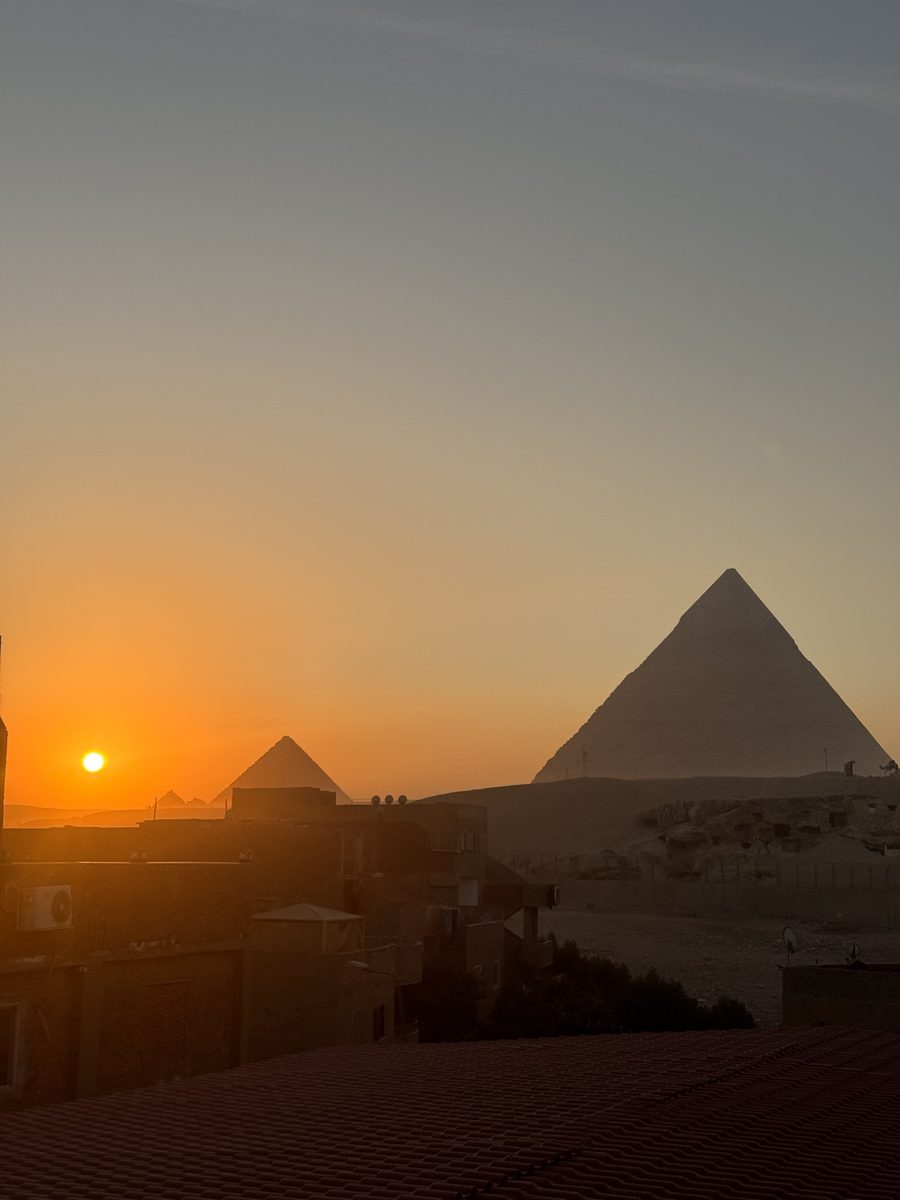
The Great Pyramid of GizaVisited

Giza and Saqqara

Egypt · 29.98° N

Aligned to true north to within a fifteenth of a degree. I stood in the King's Chamber and understood less than when I arrived.

Photographed on site

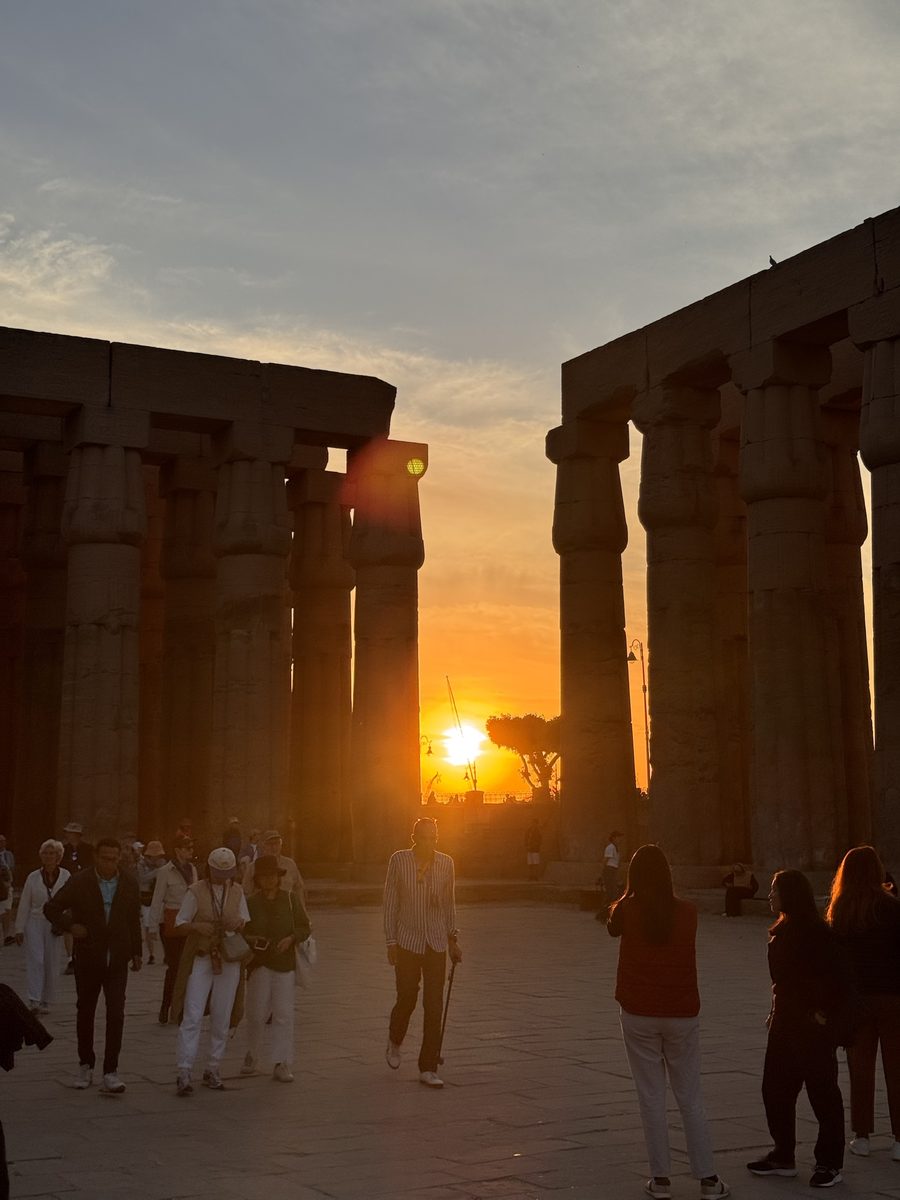
Columns of Luxor Temple silhouetted at sunsetVisited

Luxor Temple

Egypt · 25.70° N

Built for a festival where the gods crossed the river. The king who expanded it didn't quite agree with the original axis, and nobody has settled why.

Photographed on site

T-shaped pillars in Building D at Göbekli TepeAncient Apocalypse

Göbekli Tepe

Türkiye · 37.22° N

Ten-tonne carved pillars raised by people with no pottery, no metal and no farming, then deliberately buried.

Photo: Zhengan, CC BY-SA 4.0, via Wikimedia Commons

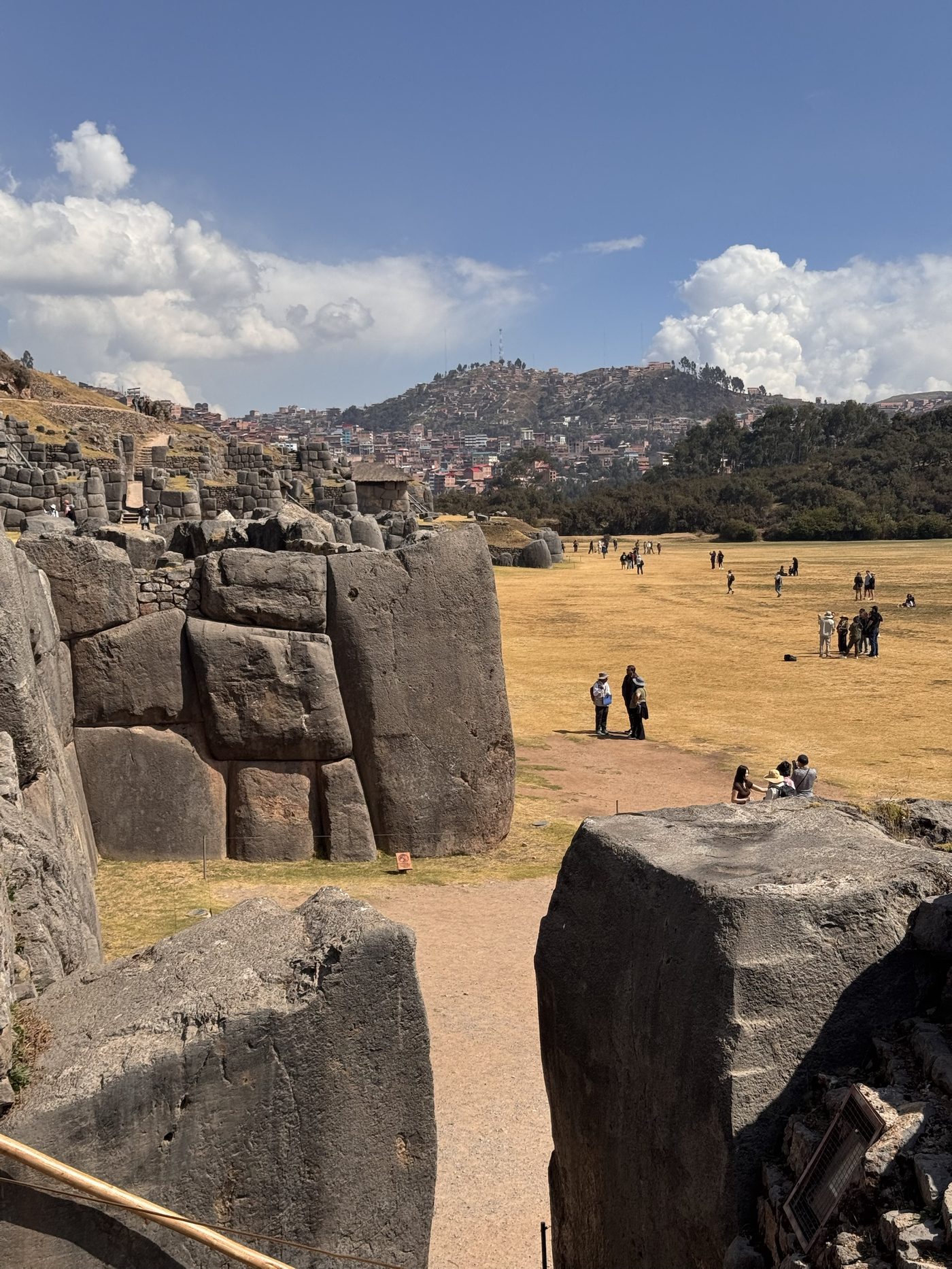
The zigzag terrace walls of SacsayhuamánAncient Apocalypse

Sacsayhuamán and Machu Picchu

Peru · 13.51° S

Blocks over a hundred tonnes with joints you cannot fit a blade into, cut on faces that were then buried inside the wall.

Photographed on site

The hill of Visocica near Visoko, BosniaResolved

Visoko

Bosnia and Herzegovina · 43.99° N

The hill called the Pyramid of the Sun. What the geologists found, and why people keep coming anyway.

Licensed CC BY-SA 3.0, via Wikimedia Commons

Terraced megalithic site of Gunung Padang, West JavaRetracted

Gunung Padang

Indonesia · 6.99° S

A real megalithic terrace, a 27,000-year claim, and a journal that withdrew the paper eighteen months later.

Licensed CC BY-SA 4.0, via Wikimedia Commons

Precisely cut H-shaped andesite blocks at Puma PunkuIn progress

Tiwanaku & Puma Punku

Bolivia · 16.55° S

Sub-millimetre precision in one of the hardest stones there is. The archaeologist who dated it to the Ice Age used real astronomy and a false premise.

Licensed CC BY-SA 3.0, via Wikimedia Commons

Stacked basalt columns at Nan Madol, MicronesiaIn progress

Nan Madol

Micronesia · 6.84° N

Ninety-two artificial islets of stacked basalt, raised on a reef in the open Pacific.

Photo via Wikimedia Commons, see file page for licence and author

The trilithon stones in the west wall at BaalbekIn progress

Baalbek

Lebanon · 34.01° N

Three 800-tonne stones in a wall, a 1,650-tonne one abandoned in the quarry, and a sun temple that points at the Pleiades instead.

Photo: Guillaume Piolle, licensed CC BY 3.0, via Wikimedia Commons

Draden

Hetzelfde verhaal, op meer dan één plek gevonden. Geen bewijs van contact, maar een registratie van waar een motief opduikt, en wat voor soort verband dat zou kunnen betekenen.

The Cosmic Hunt

What is there
A bear, pursued into the sky, becomes the Great Bear. The same core motif appears among Siberian, North American and some European hunting cultures.
What is proposed
Julien d'Huy's statistical reconstruction of motif variants suggests the story could be tens of thousands of years old, old enough to have travelled with the first people into the Americas.
Type of connection
Possibly common descent. One of the few motifs with a quantitative case for a shared, ancient origin rather than separate invention.
What stays open
The statistical method itself is debated, and the motif catalogues it depends on are incomplete.

Primary texts: the Library →

The Flood

What is there
Deluge accounts appear in Mesopotamian, Hebrew, Greek, Indian, Chinese, Aboriginal Australian and North American traditions, many recorded before those cultures were in contact.
What is proposed
Independent memory of real regional flooding at the end of the last glacial period. Or a shared narrative structure any river-dwelling people would arrive at. Or diffusion along trade routes earlier than we assume.
Type of connection
Unresolved. Arguments for convergence and for contact both exist, and no single case here is strong enough to settle it.
What stays open
Sea level rose roughly 120 metres after the last ice age. Whatever coastal world existed before that is now underwater, and we have surveyed almost none of it.

Aligned to the Sky

What is there
Giza to true north. Newgrange to the winter solstice sunrise. Chichén Itzá to the equinox. Stonehenge to the summer solstice. Different continents, different millennia.
What is proposed
That any agricultural society watching the horizon would arrive at solstice markers independently, since the sky is the one calendar everyone has.
Type of connection
Most likely convergence: independent invention, not shared descent.
What stays open
Convergence explains the impulse. It explains the precision less easily, and the precision is what you notice on site.
What if

Convergence is the sensible answer to why the same stories keep appearing, and I think it is mostly right. People everywhere watch the same sky, fear the same water, and bury the same dead.

But convergence explains the subject better than it explains the detail. Why seven, so often? Seven gates, seven judges, seven sisters, seven sages. There is a tidy answer, namely seven visible wandering lights in the sky and seven days to a moon's quarter, and it may well be the whole answer. It just always feels like slightly less than the question deserves.

Kijken & verkennen

De video's stellen de vraag in tien minuten. Het archief bevat wat er niet in paste: bronnen, kaarten, en de delen die nog openstaan.

Waarom ik hieraan begon

Ik ging naar Egypte met de verwachting een antwoord te vinden. Staand in de Vallei der Koningen, en later binnen in de Grote Piramide, kwam ik naar buiten met een langere lijst vragen dan ik had meegenomen.

Dat verraste me meer dan de monumenten zelf. Ik was ervan uitgegaan dat de oude wereld grotendeels uitgezocht was, dat archeologen het wel wisten en dat er alleen voetnoten overbleven. Daar staand kreeg ik die aanname niet in overeenstemming met wat ik voor me zag.

Hoe meer ik daarna las, hoe vaker ik hetzelfde patroon zag: op sommige plekken een echt archeologisch antwoord, op andere een serieus en lopend meningsverschil, en op een flink aantal plekken weet niemand het gewoon nog. Ik kon nergens een plek vinden die die drie eerlijk uit elkaar hield. Het meeste dat ik las had al besloten welke van de drie het wilde zijn voordat het begon.

Ik wilde een plek die nog niet had besloten. Dat is dit.

Hemel en steen

Bijna elke plek in dit archief is gebouwd door mensen die de horizon veel nauwkeuriger in de gaten hielden dan wij. Ze wisten waar de zon zou opkomen op de kortste dag. Ze wisten welke sterren een seizoen lang verdwenen en weer terugkwamen. Die kennis legden ze vast in steen, op een schaal die hun decennia kostte.

Wij erfden de gebouwen en verloren de reden. Ik denk niet dat dat iets kleins is om kwijt te raken.

Dit archief is geen betoog. Het is een verslag van gaan kijken: wat er staat, wat de hemel erboven doet, wat er is voorgesteld, en wat er nog ontbreekt. Ik ben niet gekwalificeerd om deze vragen te sluiten. Ik ben alleen koppig genoeg om ze hardop te blijven stellen.

NS WE 062° jun118° dec

Sunrise azimuths at 29.98° N, the latitude of the Giza plateau. Approximate, ignoring refraction and local horizon height.